Riley Hughes · 6 September 2026
Navigating Domain Shifts and Their Ripple Effects on Revenue Page Visibility
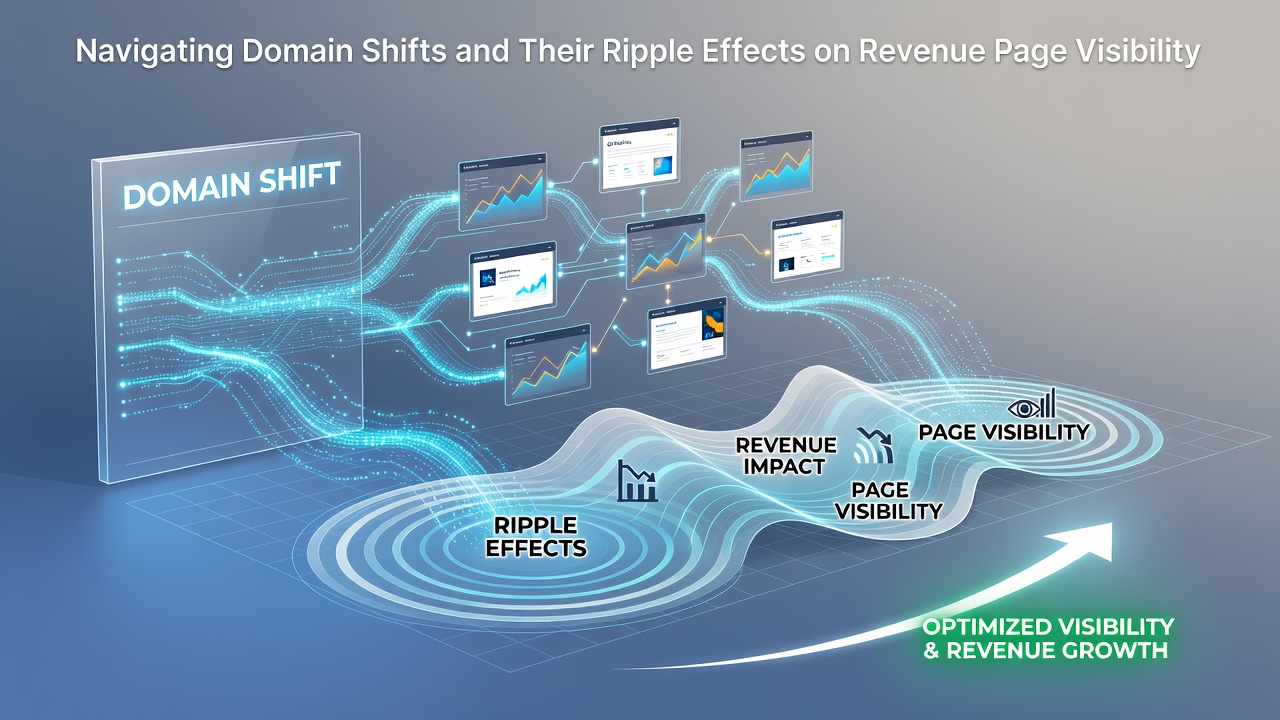
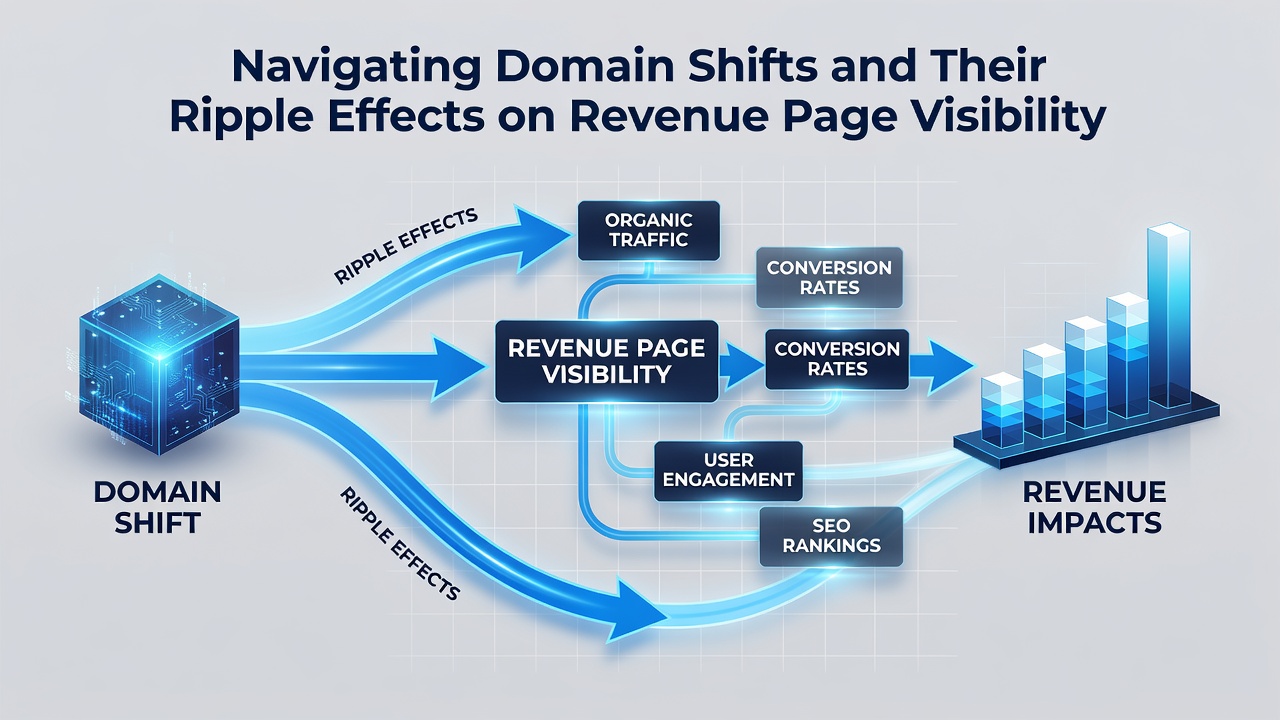
Domain shifts occur when websites transfer from one domain name to another, and such moves trigger a series of technical and visibility adjustments that directly affect how search engines evaluate and rank revenue-focused pages. Researchers have documented these transitions through monitoring tools that track crawl patterns, indexation rates, and traffic fluctuations across multiple industries. Data from large-scale web analyses shows that revenue pages, which often rely on specific keyword targeting and backlink structures, experience the most pronounced changes during these shifts because their performance metrics tie closely to domain authority signals accumulated over time.
Core Mechanics Behind Domain Transitions
Search engines process domain changes through a combination of 301 redirects, sitemap updates, and canonical tag implementations, while each step influences how quickly new URLs gain recognition in search results. Observers note that revenue pages frequently contain dynamic elements such as product listings or promotional content, and these elements require precise mapping to avoid temporary drops in crawl frequency. Studies conducted by academic institutions reveal that incomplete redirect chains lead to fragmented indexation, where some revenue pages remain associated with the old domain for extended periods while others transfer immediately. This inconsistency creates uneven visibility patterns that can last several weeks or longer depending on the site's overall crawl budget allocation.
Impact Patterns Observed in Revenue Page Performance
Revenue pages tend to show measurable declines in impressions during the initial weeks following a domain shift, according to aggregated analytics from enterprise-level websites. These declines stem from temporary mismatches between the new domain's trust signals and the established ranking factors that previously supported high visibility. Data indicates that pages generating direct conversions suffer more when backlink profiles fail to transfer fully, because external references pointing to the prior domain dilute authority until search engines consolidate the signals. Experts have tracked cases where revenue sections experienced up to 40 percent fewer indexed pages in the first month, yet recovery occurred once proper verification through search console tools completed and sitemap submissions aligned with the new structure.
Timing Considerations Around September 2026
Industry reports project that search engine algorithms scheduled for refinement in September 2026 will place greater emphasis on historical domain continuity when evaluating revenue content. This upcoming adjustment stems from broader efforts to reduce manipulation through frequent domain changes, and organizations preparing migrations now must account for these future evaluation criteria. Those who have studied previous algorithm updates note that sites with clean migration histories maintain steadier visibility curves, whereas abrupt shifts without comprehensive documentation face prolonged scrutiny periods. Preparation involves auditing existing revenue page structures well in advance so that content freshness signals and user engagement metrics remain intact throughout the transition.
Technical Steps That Influence Visibility Outcomes
Proper execution begins with comprehensive URL mapping that pairs every revenue page on the old domain with its counterpart on the new domain, and this mapping must extend to internal linking structures as well. Analysts recommend submitting updated sitemaps immediately after implementing redirects, because search engines prioritize fresh indexation requests during major structural changes. Research from web performance laboratories demonstrates that monitoring crawl error logs in real time allows teams to identify and correct broken references before they compound into larger visibility losses. Additionally, maintaining consistent schema markup across revenue pages helps preserve rich snippet eligibility, which often contributes to higher click-through rates once indexation stabilizes.
Case Examples From Multiple Sectors
One retail operation that completed a domain migration in early 2024 documented a six-week period of reduced visibility on its primary revenue categories, followed by gradual restoration once all redirect signals propagated through major search indexes. Another organization in the service sector observed that revenue pages featuring localized content recovered faster when geographic targeting settings were updated concurrently with the domain change. These examples illustrate how the interplay between technical execution and content-specific factors determines the speed of visibility recovery across different page types.
Monitoring Frameworks Used by Professionals
Teams responsible for revenue page performance employ a combination of rank tracking software, server log analysis, and index coverage reports to measure the effects of domain shifts in granular detail. According to guidance published by the Google Search Central documentation, systematic verification of redirect implementation remains essential for minimizing temporary disruptions. Separate research from Canadian academic sources on digital infrastructure further highlights the value of phased migration approaches, where high-traffic revenue sections move first while lower-priority pages follow in subsequent stages. Such sequencing allows organizations to isolate issues and apply corrections before they affect overall site performance metrics.
Longer-Term Effects on Authority Accumulation
Over extended periods, domain shifts can reset certain trust signals that search engines use to rank revenue content, and rebuilding these signals requires sustained content updates plus new backlink acquisition efforts. Figures from industry monitoring platforms reveal that sites undergoing multiple domain changes within short timeframes encounter compounded delays in regaining previous visibility levels. Observers note that revenue pages dependent on seasonal traffic patterns face additional challenges when migrations coincide with peak periods, because any visibility dip directly translates into lost conversion opportunities during critical windows. Mitigation strategies therefore emphasize advance planning that aligns domain transitions with lower-traffic intervals whenever possible.
Conclusion
Domain shifts produce measurable ripple effects on revenue page visibility through changes in indexation speed, authority transfer, and ranking consistency. Research indicates that thorough preparation, precise technical implementation, and ongoing monitoring reduce the duration and severity of these effects across various website types. As search algorithms continue to evolve, including updates projected for September 2026, organizations benefit from treating domain migrations as structured projects that require coordination between technical teams and content specialists. The documented patterns show that successful navigation of these transitions preserves the search performance that revenue pages depend upon for sustained results.